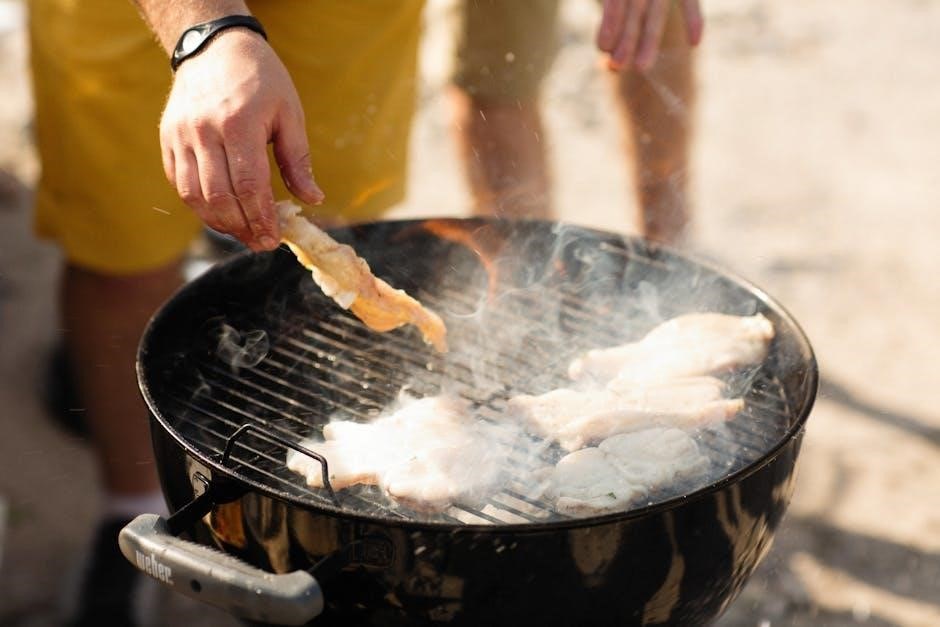
Char-Broil Electric Smoker Manual: A Comprehensive Guide
This manual details operation‚ maintenance‚ and troubleshooting for Char-Broil electric smokers‚ designed for outdoor use‚ offering flavorful results with wood chips;
Char-Broil electric smokers provide a convenient and accessible method for enjoying the art of smoking foods. Unlike traditional charcoal or gas smokers‚ these models utilize electric heating elements to generate consistent temperatures‚ simplifying the process for both novice and experienced users. Available in black and stainless-steel finishes‚ they offer a user-friendly experience‚ focusing on flavor infusion through wood chips.
Understanding the Components
A Char-Broil electric smoker comprises several key parts. These include the smoker body and housing‚ providing insulation and structure. The control panel manages temperature settings‚ while the wood chip box and tray introduce smoke flavor. A crucial element is the heating element‚ responsible for consistent heat‚ alongside its temperature control system. Understanding each component is vital for optimal smoker performance and longevity.
Smoker Body and Housing
The smoker body and housing form the core structure‚ typically constructed from durable materials like steel. These components provide essential insulation‚ maintaining consistent internal temperatures during operation. Char-Broil smokers often feature black or stainless-steel finishes‚ displaying the brand logo prominently. The housing protects internal parts and ensures safe operation‚ contributing to the smoker’s overall stability and longevity.
Control Panel Overview
The control panel is the central interface for operating your Char-Broil electric smoker; It typically features a power button and temperature adjustment controls‚ often utilizing a ‘char’ data type for digital displays. These panels may show error codes using ‘char’ arrays. Understanding the panel’s functions is crucial for precise temperature selection and monitoring throughout the smoking process‚ ensuring optimal cooking results.
Wood Chip Box and Tray
The wood chip box and tray are essential for generating smoke flavor. These components hold wood chips‚ which smolder and infuse food with a desirable smoky taste. Regular cleaning of the tray is vital to prevent flare-ups and maintain consistent smoke production. Different wood types impart unique flavors‚ enhancing the overall culinary experience. Proper loading ensures optimal smoke generation during operation.
Heating Element and Temperature Control
The electric heating element provides consistent and controlled heat‚ crucial for effective smoking. Temperature control allows users to select desired cooking temperatures‚ ensuring optimal results for various meats. Monitoring temperature fluctuations is important for maintaining consistent cooking. Proper maintenance of the heating element ensures longevity and efficient operation. Digital displays often utilize ‘char’ data types for temperature readings.
Setting Up Your Char-Broil Electric Smoker
Proper setup is vital for safe and efficient operation. Begin with an initial burn-in procedure to eliminate manufacturing residues. Assembly may be required depending on the model; follow included instructions carefully. Choose a safe‚ outdoor location‚ away from flammable materials. Ensure adequate ventilation and stable footing. Review all safety precautions before powering on the smoker for the first time.
Initial Burn-In Procedure
The initial burn-in eliminates potential odors and residues. Power on the smoker and set the temperature to a moderate setting‚ around 250°F (121°C). Allow it to run for approximately two to three hours without any food inside. This process helps season the smoker and prepares it for optimal performance. Ensure good ventilation during this procedure‚ as some smoke may be produced.
Assembling the Smoker (if required)
Some Char-Broil models require minimal assembly. Carefully unpack all components and compare them to the parts list in this manual. Follow the step-by-step instructions‚ ensuring all screws are tightened securely. Pay close attention to the placement of the heating element and wood chip tray. Do not force any parts during assembly; refer to diagrams for correct orientation.
Placement and Safety Considerations
Always operate your Char-Broil electric smoker outdoors‚ away from flammable materials like decks or overhanging branches. Ensure a stable‚ level surface for placement. Keep the smoker at least 10 feet from buildings and combustible items. Never leave the smoker unattended during operation. Electrical safety is paramount; use a grounded outlet and avoid extension cords.
Operating Instructions
To begin‚ plug in your Char-Broil electric smoker and select your desired temperature using the control panel. Add wood chips to the designated wood chip box or tray for smoke flavor. Monitor the internal temperature using the built-in thermometer‚ and estimate cooking time based on your recipe. Consistent temperature is key for optimal smoking results.
Powering On and Temperature Selection
Ensure the smoker is plugged into a grounded outlet before operation. The control panel allows precise temperature adjustments‚ typically ranging from 100°F to 300°F. Select your desired temperature; the heating element will activate to maintain it. Allow sufficient preheating time – approximately 15-20 minutes – before adding food. Monitor the initial temperature rise for accuracy.
Adding Wood Chips for Smoke Flavor
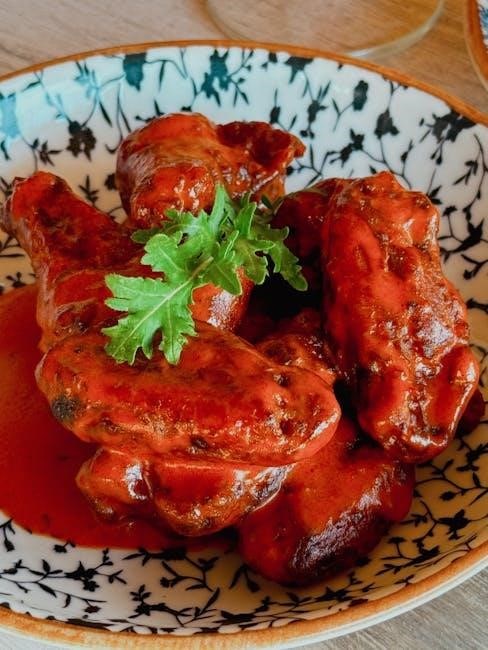
Wood chips are crucial for achieving authentic smoky flavor. Open the wood chip box or tray and add your chosen wood type – hickory‚ mesquite‚ or applewood are popular choices. Do not overfill; a moderate layer is sufficient. The heating element will smolder the chips‚ generating smoke. Replenish wood chips every 45-60 minutes to maintain consistent smoke production throughout the cooking process.
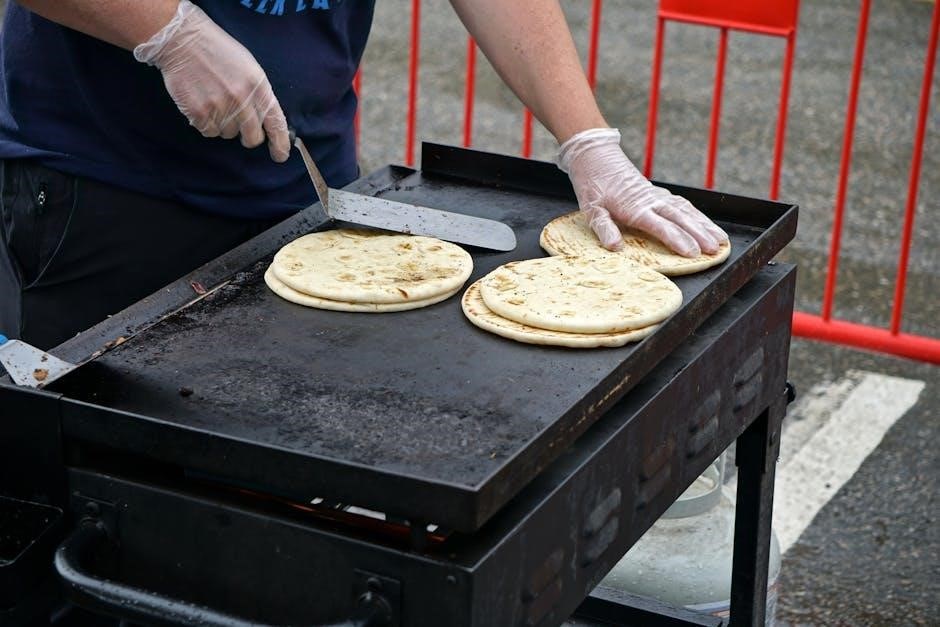
Monitoring Temperature and Cooking Time
Regularly check the smoker’s temperature using the built-in thermometer. Maintain the desired temperature for your chosen meat‚ referencing reliable smoking guides. Cooking time varies based on meat type‚ size‚ and internal temperature. Use a separate meat thermometer to verify doneness. Avoid frequent door openings‚ as this releases heat and extends cooking time. Patience is key for optimal results!
Cooking with Your Electric Smoker
Electric smokers excel at imparting smoky flavor to various foods. Experiment with wood types like hickory‚ mesquite‚ or applewood to complement different meats. Properly prepare food with rubs or marinades before smoking. Monitor internal temperatures closely for safe and delicious results. Remember‚ smoking is a low-and-slow process‚ requiring patience for optimal flavor development and tenderness.
Recommended Wood Types
Hickory delivers a robust‚ bacon-like flavor‚ ideal for ribs and pork shoulder. Mesquite provides an intense‚ earthy taste‚ perfect for beef brisket. Applewood offers a milder‚ sweeter smoke‚ excellent for poultry and fish. Cherry wood imparts a fruity aroma‚ complementing pork and chicken. Experiment to discover your preferred wood combinations for unique flavor profiles‚ enhancing your smoking experience.
Preparing Food for Smoking
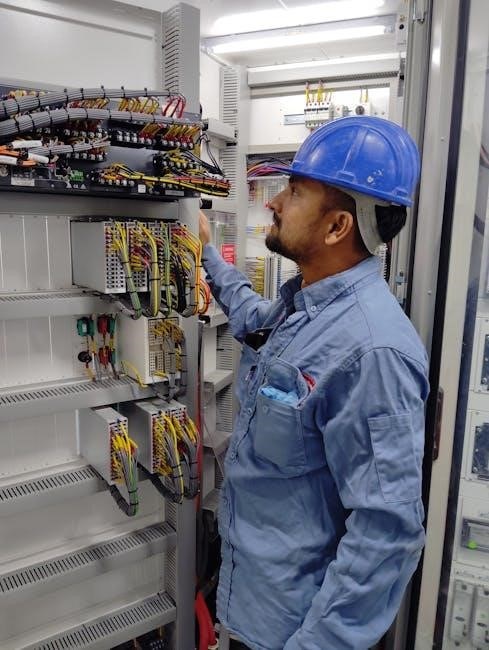
Trim excess fat from meats to prevent flare-ups and enhance smoke penetration. Brining or marinating adds moisture and flavor‚ resulting in a juicier final product. For poultry‚ consider removing the backbone for spatchcocking‚ ensuring even cooking. Rubs consisting of spices and herbs create a flavorful bark. Proper preparation is crucial for optimal smoking results‚ maximizing taste and texture.
Smoking Different Types of Meat
Pork shoulder benefits from low and slow smoking‚ reaching an internal temperature of 203°F for pull-apart tenderness. Beef brisket requires similar patience‚ aiming for 203°F as well. Poultry‚ like chicken or turkey‚ smokes best at slightly lower temperatures‚ around 165°F. Fish cooks quickly; monitor closely to prevent drying. Adjust wood chip selection to complement each meat’s flavor profile for exceptional results.
Maintaining Your Char-Broil Electric Smoker

Regular cleaning extends your smoker’s life and ensures optimal performance. After each use‚ remove grease and food debris from the smoker body and grates. Thoroughly clean the wood chip tray to prevent buildup. Inspect the heating element for any damage or residue. Proper maintenance guarantees consistent temperatures and flavorful smoking experiences‚ preserving your investment for years to come.
Cleaning the Smoker After Each Use
Post-cooking cleanup is crucial. Allow the smoker to cool completely before starting. Remove ash and grease from the smoker body using a scraper and warm‚ soapy water. Wash grates thoroughly. Inspect for any food residue and address it promptly. A clean smoker prevents flavor transfer and ensures hygienic operation‚ maximizing the enjoyment of future smoking sessions.
Cleaning the Wood Chip Tray
Regularly empty and clean the wood chip tray after each use to prevent buildup and maintain optimal smoke production. Remove any remaining wood chips and discard them safely. Wash the tray with warm‚ soapy water‚ ensuring all residue is removed. A clean tray prevents stale flavors and ensures consistent smoke‚ enhancing the quality of your smoked foods.
Heating Element Maintenance
Inspect the heating element periodically for any signs of damage or excessive buildup. Disconnect the smoker from the power source before cleaning. Gently remove any debris with a soft brush or cloth; avoid using abrasive cleaners. A properly maintained heating element ensures consistent and accurate temperature control‚ crucial for successful smoking and extending the smoker’s lifespan.
Troubleshooting Common Issues
Addressing problems promptly ensures optimal performance. If the smoker isn’t heating‚ check the power connection and element. Temperature fluctuations may indicate inconsistent wood chip supply or external factors. Smoke production issues could stem from insufficient chips or a blocked vent. Consult the manual for detailed solutions and safety precautions before attempting repairs.
Smoker Not Heating
If your Char-Broil electric smoker fails to heat‚ first verify the power cord is securely connected to a functioning outlet. Inspect the heating element for any visible damage or obstructions. A tripped circuit breaker could also be the culprit; reset if necessary. If issues persist‚ consult the manual’s troubleshooting section or contact customer support.
Temperature Fluctuations
Experiencing temperature swings in your Char-Broil electric smoker is common. External factors like ambient temperature and wind can influence internal heat. Ensure a tight seal around the door and vents. Avoid frequent opening during operation. Consistent wood chip supply is crucial. If fluctuations are extreme‚ check the heating element and temperature sensor for proper function‚ referencing the manual.
Smoke Production Problems
Insufficient smoke often stems from inadequate wood chips. Ensure the wood chip box is full and the chips are properly moistened‚ but not soaked. Check for blockages in the wood chip tray or vent pathways. Some wood types produce less visible smoke. Verify the heating element is functioning correctly‚ as it needs sufficient heat to vaporize the wood. A clean smoker also promotes better smoke circulation.
Safety Precautions
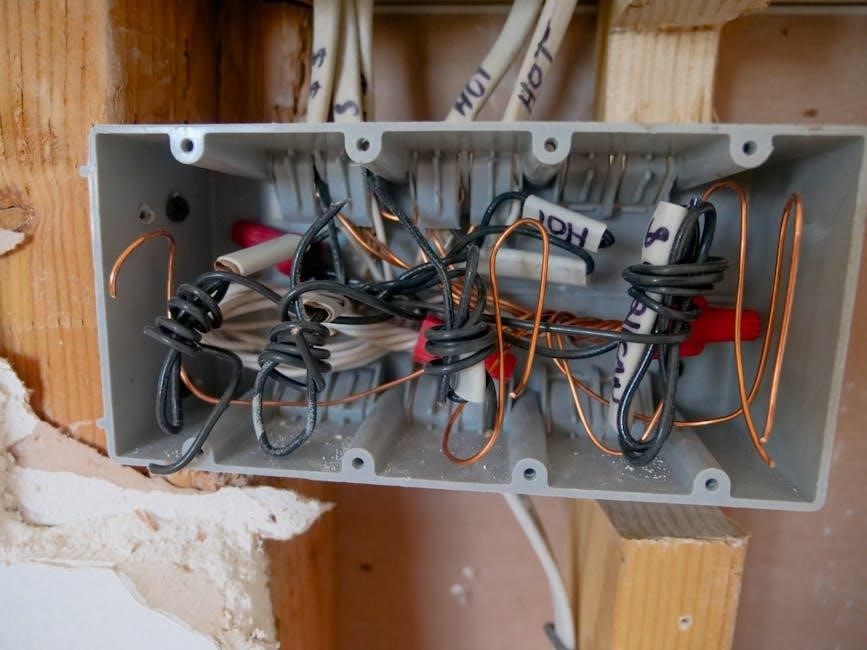
Always operate your Char-Broil electric smoker outdoors‚ away from flammable materials. Never leave the smoker unattended during operation‚ and ensure children and pets are kept at a safe distance; Follow all electrical safety guidelines to prevent shock or fire hazards. Disconnect the power cord before cleaning or performing maintenance. Supervise operation closely‚ and avoid using extension cords if possible.
Electrical Safety Guidelines
Ensure the smoker is properly grounded to prevent electrical shock. Never operate with a damaged cord or plug; replace immediately. Avoid using extension cords‚ but if necessary‚ use a heavy-duty outdoor-rated cord. Keep the electrical connections dry and protected from the elements. Do not immerse the smoker or its electrical components in water. Disconnect power before cleaning or maintenance.
Outdoor Use Only
This Char-Broil electric smoker is designed exclusively for outdoor use‚ ensuring proper ventilation and preventing fire hazards. Never operate indoors‚ in garages‚ or enclosed spaces. Maintain a safe distance from flammable materials like decks‚ siding‚ and overhanging branches. Place the smoker on a level‚ non-combustible surface. Avoid operating during rain or severe weather conditions to protect electrical components.
Supervision During Operation
Constant supervision is crucial when operating your Char-Broil electric smoker. Never leave the smoker unattended while powered on. Keep children and pets away from the hot surfaces to prevent burns. Be mindful of the hot exterior and smoking materials. Always disconnect the power cord when not in use and during cleaning or maintenance procedures for safety.
Understanding ‘char’ Data Type in Relation to Smoker Controls
The ‘char’ data type represents single characters within the smoker’s digital display and firmware. It’s fundamental for displaying temperature units or error messages. ‘char’ arrays store text strings like “Error 404”. Pointers utilizing ‘char’ manage memory for settings. Understanding ‘char’ versus ‘std::string’ impacts memory usage and efficiency in the smoker’s software‚ influencing control panel functionality.
‘char’ as a Data Type in Digital Displays
Within the Char-Broil smoker’s control panel‚ ‘char’ displays numerical digits and textual prompts. Each digit (0-9) or letter is represented by its ASCII ‘char’ value. The display utilizes ‘char’ arrays to construct complete messages‚ like “Set Temp”. These characters are sent to the display driver for visual representation‚ enabling user interaction and temperature monitoring.
How ‘char’ Relates to Temperature Readings
Temperature values from the sensor are initially numerical data‚ but displayed as text using ‘char’. The smoker’s firmware converts the numerical temperature into its ‘char’ representation for the digital display. Multiple ‘char’ values combine to form the complete temperature reading (e.g.‚ “225°F”). This conversion allows the control panel to present information in a human-readable format.
Char Arrays and String Literals in Smoker Firmware
Smoker firmware utilizes ‘char’ arrays and string literals for control panel messages and error codes. String literals‚ like “Low Temp‚” are stored directly in memory. ‘Char’ arrays are used to dynamically build messages‚ such as displaying the current temperature. Error codes‚ represented as ‘char’ sequences (e.g.‚ “E01”)‚ provide diagnostic information. These textual elements enhance user interaction and system feedback.
Storing Text Messages on the Control Panel
The Char-Broil smoker’s control panel displays messages using ‘char’ arrays and string literals stored in the firmware’s read-only memory. These messages‚ such as “Preheating” or “Ready‚” guide the user. The system accesses these stored strings and presents them on the digital display. Efficient memory management is crucial‚ as limited space dictates concise message phrasing for optimal functionality and clarity.
Using ‘char’ for Error Codes
Char-Broil electric smokers utilize ‘char’ arrays to represent error codes displayed on the control panel. These codes‚ like “E1” for a heating element failure‚ provide diagnostic information. Storing error codes as ‘char’ minimizes memory usage compared to strings. The firmware interprets these codes‚ signaling a problem to the user‚ aiding in troubleshooting and potential repair of the smoker unit.
Pointers and Memory Management in Smoker Electronics
Char-Broil’s smoker electronics leverage pointers for efficient memory access‚ particularly with temperature sensors. Pointers store memory addresses‚ allowing quick data retrieval without copying. Memory allocation manages settings storage‚ ensuring data persistence. Careful pointer usage prevents memory leaks or crashes. This system optimizes performance‚ enabling precise temperature control and reliable operation of the electric smoker’s internal components.
Pointer Usage in Temperature Sensors
Char-Broil electric smokers utilize pointers to directly access temperature sensor data. Instead of copying values‚ pointers store the sensor’s memory address‚ enabling rapid temperature readings. This minimizes processing overhead and ensures accurate‚ real-time temperature monitoring. Efficient pointer implementation is crucial for maintaining consistent cooking temperatures and delivering optimal smoking results‚ enhancing the user experience.
Memory Allocation for Smoker Settings
Char-Broil smoker firmware dynamically allocates memory to store user settings‚ like desired temperature and timer duration. This allocation often employs ‘char’ arrays or pointers to manage these values efficiently. Proper memory management prevents data corruption and ensures settings are retained even during power interruptions. Efficient allocation optimizes performance and contributes to a reliable smoking experience.
Differences Between `char` and `std::string` in Smoker Software
`char` arrays are fixed-size‚ suitable for storing short‚ static text like error codes‚ while `std::string` offers dynamic resizing for variable-length data‚ such as displayed messages. `char` uses less memory for small strings‚ but `std::string` simplifies memory management and avoids buffer overflows. Choosing between them impacts performance and code maintainability within the smoker’s control system.
When to Use `char` vs. `std::string`
Employ `char` arrays for fixed-length data like temperature unit labels or concise error messages within the smoker’s firmware. Utilize `std::string` when handling user input‚ dynamic display text‚ or potentially lengthy log messages. `char` offers efficiency for static content‚ while `std::string` provides flexibility and safety for variable data‚ optimizing resource usage and code clarity.
Impact on Memory Usage
`char` arrays consume a predetermined amount of memory at compile time‚ ideal for fixed smoker settings. `std::string` dynamically allocates memory as needed‚ potentially leading to fragmentation if not managed carefully. Efficient memory handling is crucial in embedded systems like smoker controllers‚ where resources are limited. Choosing `char` for static data minimizes overhead‚ while `std::string` requires careful allocation and deallocation.
Storage Duration of `char` Arrays in Smoker Systems
`char` arrays in smoker firmware can have compile-time or run-time storage. Static arrays‚ initialized at compile time‚ reside in flash memory. Dynamic arrays‚ created during operation for temporary data like temperature readings‚ are allocated on the stack or heap. Proper memory management prevents leaks and ensures stable smoker functionality‚ impacting settings retention and error message display.
Compile-Time vs. Run-Time Storage
Compile-time storage allocates memory during the build process‚ ideal for constant smoker data like error codes or fixed text messages displayed on the control panel. Run-time storage dynamically allocates memory while the smoker operates‚ crucial for variables like temperature readings. This distinction impacts memory usage and the smoker’s ability to adapt during operation.
Impact on Smoker Functionality
Storage duration directly affects smoker responsiveness. Compile-time storage ensures consistent error message display‚ while run-time storage enables dynamic temperature adjustments. Efficient memory management prevents crashes during operation. Proper allocation for smoker settings—like desired temperature or cooking time—guarantees accurate control and a seamless user experience‚ ultimately influencing cooking results.